Who Lord Ganesh is
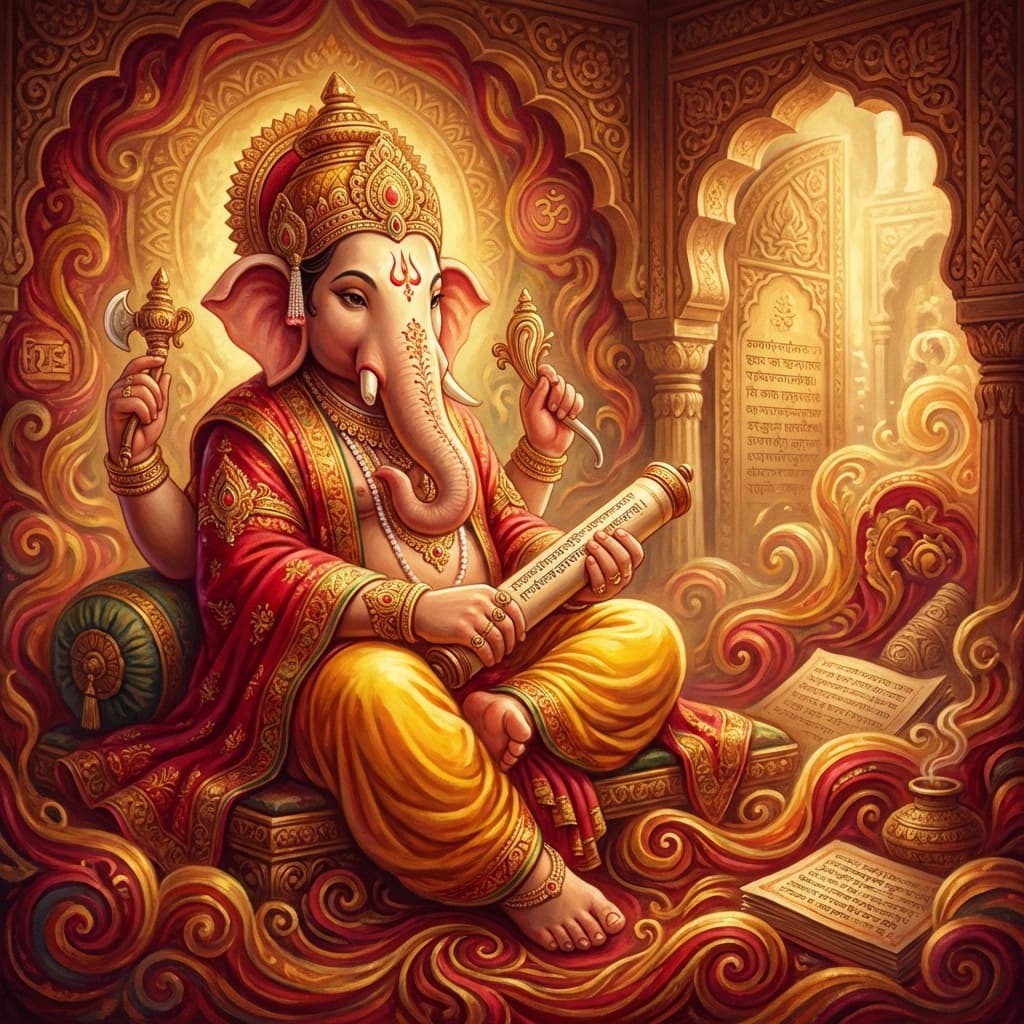
Ganesh — known also as Ganapati, Vinayaka, Vighnaharta, and by dozens of regional names — is the elephant-headed son of Shiva and Parvati and one of the most widely worshipped deities in the Hindu pantheon. He is invoked first, before any other god, at the start of every ritual, every journey, every new venture, and at the opening of most devotional texts. His role is that of vighnaharta — remover of obstacles — and buddhi-pradata — bestower of intellect and discernment.
The story of how Ganesh acquired his elephant head is told in several Puranas, with the most familiar version drawn from the Shiva Purana: Parvati creates a child from the turmeric paste of her bath and sets him to guard her chamber. Shiva, returning home and refused entry by this unfamiliar boy, beheads him in anger. When Parvati’s grief becomes apparent, Shiva instructs his attendants to bring the head of the first creature they encounter — an elephant — and Ganesh is restored. The story is read both narratively and allegorically: a meditation on ego, on the meeting of consciousness and form, on rebirth.
Iconography and symbolism
Almost every feature of Ganesh’s form is read as instruction. The elephant head stands for wisdom and discrimination; the large ears for the value of listening more than speaking; the small eyes for concentration; the large belly for the capacity to digest all of life’s experiences, pleasant and unpleasant alike. He is Ekadanta, the single-tusked — one tusk broken, in a well-known tradition, so that he could serve as scribe for the sage Vyasa’s dictation of the Mahabharata, an emblem of sacrifice in the cause of knowledge. In his hands he typically holds a noose (pasha) to draw the devotee near, a goad (ankusha) to steer the mind, and a bowl of modaks, the sweet that stands for the reward of realisation. His mount, the small mouse (mushaka), signifies mastery over restless desire — the great deity carried by the humblest of creatures.
Festivals and worship days
The most important festival is Ganesh Chaturthi, observed on the fourth day of the bright half of Bhadrapada (August–September). In Maharashtra, Karnataka, and Goa, the festival is community-wide: clay images of Ganesh are installed in homes and public pandals, worshipped for one and a half, three, five, seven, or eleven days, and finally immersed in water in a procession called visarjan. The festival took its modern public form in late 19th-century Pune through the efforts of Bal Gangadhar Tilak.
Sankashti Chaturthi — the fourth day of the dark fortnight each lunar month — is observed by devotees as a fasting day for Ganesh. Tuesday and Wednesday are the conventional weekly days for his worship, though many traditions begin every day with a Ganesh invocation.
How devotees worship Ganesh
Because Ganesh is the remover of obstacles, his worship opens most pujas rather than standing alone. Devotees offer modaks and laddus — his favourite sweets — along with fresh durva grass (customarily in a bundle of twenty-one blades), red hibiscus flowers, sindoor, and a lit lamp. Recitation of the Ganesh Chalisa or Ganesh Aarti follows, often with the simple invocation Om Gan Ganapataye Namah. During Ganesh Chaturthi the clay image is installed with pranapratishtha (invocation of life), worshipped daily, and immersed at the festival’s close; a well-known folk observance advises against looking at the moon on Chaturthi night, tied to a Puranic story of a curse. Weekly worship falls on Tuesday or Wednesday.
What devotees seek
Ganesh is invoked at the start of weddings, business openings, school examinations, journeys, and puja ceremonies of every kind. He is asked for the removal of obstacles — material, emotional, intellectual — and for the wisdom to recognise which obstacles are worth removing and which are placed in our path for our own learning.
The Ganesh texts on this page
The texts collected here gather the most widely recited compositions for daily and festival worship. The Ganesh Chalisa offers forty verses of praise in an accessible daily recitation, while the Ganesh Aarti (“Jai Ganesh Deva”) is the lamp-offering song sung at the close of worship and at the opening of countless household ceremonies. Each is presented with full text, line-by-line meaning, historical background, and guidance on how to chant.